
Why Is Grief Worse at Night?
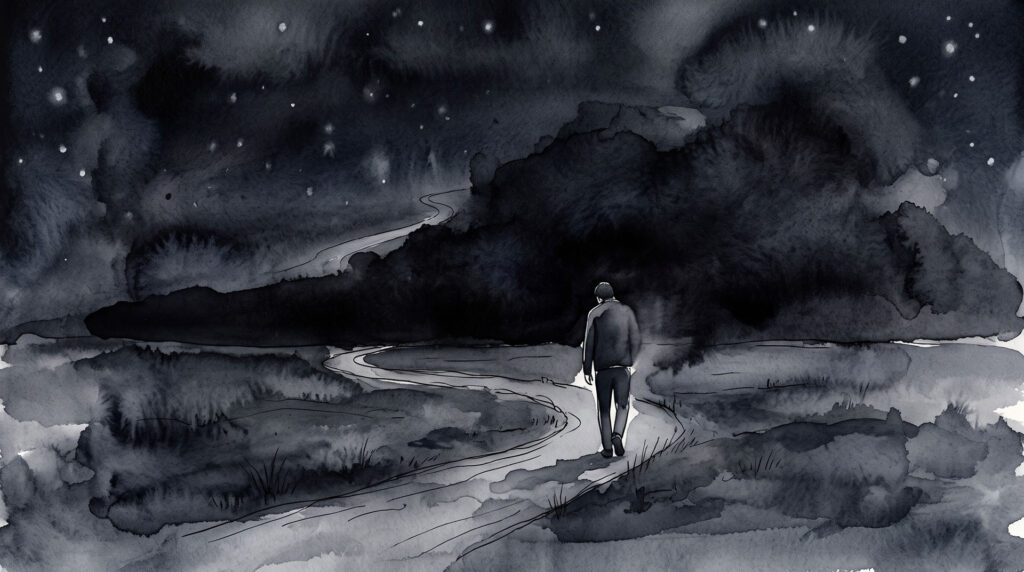
Grief can feel worse at night because trying to fall asleep or waking in the night can leave more space for loss-related thoughts and rumination. Sleep difficulties are common after bereavement and can sit alongside more intense grief, although not everyone experiences them in the same way.
You may manage work, errands, family, or conversation reasonably well, then feel as though the ground gives way when the house is quiet. A photo, an empty side of the bed, a familiar time for a phone call, or simply the effort of trying to sleep can bring the loss close again. This can happen after a death, but also after a breakup, estrangement, illness, a move, or the loss of a future you had pictured.
Nighttime grief is not a test you have failed during the day. It is often a signal that you need a smaller, gentler plan for the hours when your usual coping tools and distraction are no longer around.
Why does everything feel heavier when the day is over?
During the day, there are demands to meet. You may be answering messages, commuting, caring for others, working, making meals, or simply trying to get through a list of ordinary tasks. Those things do not remove grief, but they can occupy some of the attention that grief would otherwise take.
At night, the pace changes. There may be less noise, fewer people to contact, and fewer decisions to make. Your mind can return to what it has been carrying underneath: the conversation you wish you had had, the person you want to tell about your day, the future that now looks different.
Tiredness can make this feel sharper. When you have used up your energy getting through the day, it can be harder to keep perspective or do the practical things that usually steady you. A thought that feels manageable at 2 p.m. can feel enormous at 2 a.m.
This does not mean the thought is more true at night. It means you are meeting it with fewer resources in that moment.
Is it normal to miss someone most at bedtime?
Yes. Bedtime can carry its own rituals: a goodnight message, a shared show, a familiar conversation, a person beside you, or the quiet certainty that someone was nearby. When that pattern changes such as an empty bed, the body can notice before you have found words for it.
You might miss the person themselves. You might miss the version of yourself who felt safe, chosen, understood, or less alone. You might also be grieving the ordinary future that bedtime once assumed: another morning together, another plan, another chance to talk.
Try not to argue with yourself about whether you “should” be over it by now. Grief does not follow a timetable, and difficult feelings can appear unexpectedly. That is especially true when something familiar brings the loss into focus.
If the loss is a relationship ending, it may help to remember that missing closeness does not automatically mean the relationship was right for you or that you need to return to it. You can miss what was comforting and still know that the ending was necessary. Sometimes closure is not necessary to move on.
What should I do when grief hits as soon as I get into bed?
Start with one goal: do not make the nighttime bigger than it already is. You do not need to solve your whole grief feels before morning. You only need to make the next few minutes a little more bearable.
A simple sequence can help:
- Name what is happening. Try: “This is a hard grief moment.” Naming it can be kinder than treating the feeling as proof that you are broken or going backwards.
- Bring your body into the room. Notice the weight of the blanket, put both feet on the floor if you are sitting up, or take a slower breath than the one before it. You are not trying to force calm. You are reminding yourself that you are here.
- Choose one small comfort. Drink water, wash your face, make a warm drink, hold a pillow, listen to something quiet, or step into another room for a few minutes.
- Lower the demand. If sleep will not come immediately, let “resting” be enough. You can lie down with a podcast, a familiar audiobook, or gentle music rather than battling yourself to fall asleep.
- Save the big questions for daylight. If your mind begins replaying every detail or demanding a permanent answer, write one sentence in a note: “I will come back to this tomorrow.” You are not dismissing the feeling. You are giving it a safer time to be held.
The aim is not to make grief disappear on command. It is to avoid adding panic, self-criticism, or an exhausting argument with yourself to an already painful hour.
Why do memories show up more at night?
Memories often follow routines. A song, the time you used to call, a particular room, the sound of rain, or the way the house feels after everyone has gone to bed can become linked with someone or something important.
Some memories arrive warmly. Others come with regret, longing, anger, guilt, or a vivid replay of what happened. The same memory can hold more than one feeling. You may feel grateful for a moment and devastated that it cannot happen again.
When a memory appears, you do not have to push it away immediately or follow it all the way into a spiral. You might try saying: “I remember this because it mattered.” Then choose what you need next. Perhaps that is to sit with the memory for a minute. Perhaps it is to close the photo album, put the phone down, or move to a different room.
This is particularly important with social media. Scrolling late at night can expose you to old photos, relationship updates, birthdays, anniversaries, or people who seem to be moving through life without the loss you are carrying. Muting, unfollowing, or placing the phone outside the bedroom for a while is not dramatic. It can be a practical boundary around a vulnerable time of day.
How can I make evenings less lonely without pretending I am fine?
Loneliness does not always mean there is no one in your life. It can mean the person you most want is unavailable, or that the people around you do not understand this particular loss. At nighttime, that gap can feel very exposed.
Build a little connection into the evening before you are at your lowest point. This does not have to be a deep conversation every night. It could be:
- sending a friend a short message before bed
- arranging a regular evening call once or twice a week
- sharing a meal or a walk with someone safe
- joining a grief or peer-support group that fits your circumstances
- listening to a familiar voice through a podcast or audiobook
- journaling by writing a few honest lines instead of holding every thought alone
- find counsel from a therapist
Be specific when you can. “Evenings are hard for me lately; could we check in on Thursday?” gives someone a real way to show up. Many people want to help but do not know what would be useful.
If you do not have a person you can contact at night, make a short list during the day of people, places, or activities that help you feel slightly less alone. Keep it where you can see it. The list is not meant to replace a person you miss. It is there so that, in a difficult moment, you do not have to invent support from scratch.
What if I keep replaying the last conversation or what I should have done?
The mind often returns to unfinished moments after a loss. You may ruminate the last words you said, imagine a different decision, or search for the one detail that would make the story hurt less. This can be especially intense after a sudden death, a relationship ending without clear answers, or a loss that involved conflict.
Regret can feel like a way of staying connected or regaining control. But no amount of replaying can give you information you did not have at the time, or change what another person chose. That does not make your questions unimportant. It means they deserve a more compassionate setting than the middle of the night.
Try separating responsibility from hindsight. Ask yourself: What did I know then? What was within my control then? What am I judging now with information or pain I did not have at the time? You may still feel sad about what happened. But you do not need to keep putting yourself on trial to prove that you cared.
If guilt is part of what wakes you, it can help to know that grief can include guilt alongside sadness, anger, exhaustion, and numbness. You can explore the feeling without automatically accepting its harshest conclusion.
Should I change my sleep routine while I am grieving?
A simple evening routine can make the transition to bed less abrupt. It cannot remove loss, but it can give your headspace and body a predictable landing place.
Choose two or three things that are realistic, not perfect. For example: dim the lights, put the phone on charge outside the bedroom, have a shower, make a caffeine-free drink, and listen to the same calming audio such as white noise. Repeating a small routine teaches you that the night has structure even when your feelings do not.
It may also help to keep a notebook nearby. Before bed, write down the next day’s practical tasks and any thoughts you are afraid of forgetting. This is not a demand to journal beautifully. It is a way of telling your mind that it does not need to stay alert all night to hold everything.
Avoid treating sleep difficulty as a personal failure. Some nights will be rough. If you are awake for a long time, it can be gentler to get up briefly and do something quiet in low light than to remain in bed becoming more frustrated. Return when you feel sleepier.
If disrupted sleep is continuing, affecting your ability to function, or happening alongside worsening anxiety or depression, speak with a GP or qualified mental-health professional. Grief support can be valuable, but it is not a substitute for medical or crisis care when that is what you need.
When does night grief need more support?
You deserve support before you reach a breaking point. Consider speaking with a GP, bereavement service, or qualified mental-health professional if nights are regularly leaving you unable to function, if you are withdrawing from everyone, or if the pain is becoming harder rather than more manageable over time.
Grief support is not diagnosis, psychiatric care, or crisis intervention. It can, however, offer a space to speak honestly about the night, the memories, and the loneliness without having to minimise them.
Will nights always feel this hard?
Probably not in the same way. Grief may not disappear neatly, but many people find that its sharpest moments become less constant. The nights may still bring memories, especially around dates, songs, places, or changes in your life. Over time, though, you may have more ways to meet those moments and more evidence that a hard night can pass and a good sleep is within reach.
Do not measure progress by whether you ever cry, miss someone, or have a setback. A more useful question is: Am I finding even small ways to return to myself after the wave?
When grief comes in waves, a difficult night is not a return to day one. It is one night in a process that can be uneven, human, and still moving.
FAQ
- Why do I cry more at night when I am grieving? At night there are often fewer distractions and more quiet. Tiredness, routine, and memories can make feelings that were held back during the day more noticeable. Crying can be one way your body releases emotion; it does not mean you are coping badly.
- Why is grief worse at night after a breakup? Evenings can highlight the loss of shared routines, companionship, touch, and the future you expected. Missing a former partner at night does not necessarily mean you should reconnect. It may mean you are adjusting to a real change in your daily life.
- What can I do if I cannot sleep because I miss someone? Reduce the pressure to sleep immediately. Try a small comfort, low light, calm audio, or a brief change of room. If a thought keeps looping, write it down to return to in daylight. If sleep problems persist or are affecting daily life, seek professional advice.
- Is grief at night a sign of depression? Not necessarily. Grief can bring sadness, exhaustion, and disrupted sleep. If you are increasingly depressed or anxious, struggling to return to everyday activities, or feeling unsafe, speak with a GP or mental-health professional and seek urgent help when needed.
References
- de Lang, T. A., Buyukcan-Tetik, A., de Jong, P. J., Lancel, M., & Eisma, M. C. (2024). Trajectories of insomnia following bereavement. Sleep Medicine, 114, 159–166. https://doi.org/10.1016/j.sleep.2023.12.009
- Hardison, H. G., Neimeyer, R. A., & Lichstein, K. L. (2005). Insomnia and complicated grief symptoms in bereaved college students. Behavioral Sleep Medicine, 3(2), 99–111. https://doi.org/10.1207/s15402010bsm0302_4
- Healthdirect Australia. (2025, July). Insomnia. https://www.healthdirect.gov.au/insomnia
- Lancel, M., Stroebe, M., & Eisma, M. C. (2020). Sleep disturbances in bereavement: A systematic review. Sleep Medicine Reviews, 53, Article 101331. https://doi.org/10.1016/j.smrv.2020.101331



Find Your Safe Space Today
If you're carrying your own grief, or want support showing up for someone you love, you don't have to figure it out alone.
Kevin built this practice because he once needed it himself. Whatever you're holding, you're welcome to bring it here.
No commitment. Completely confidential.
- ✉ Send Kevin a message
- 🌏 Online sessions — Australia & Philippines
- 🔒 All communications are confidential