 Skip to main content Skip to footer
How to Grieve the Loss of Someone Who Is Still Alive
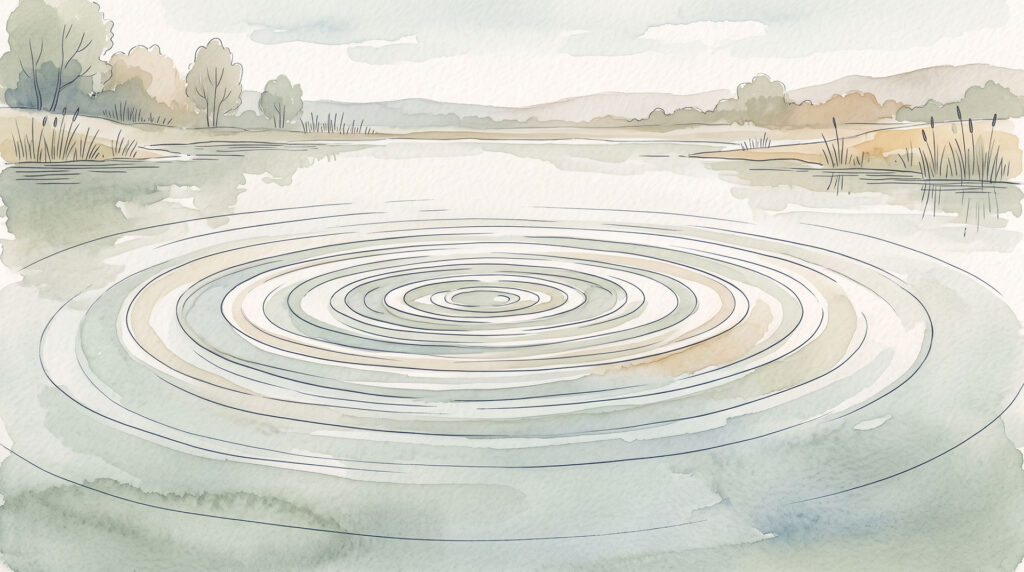
To grieve the loss of someone who is still alive, begin by naming what has changed, letting yourself feel the mixed emotions without forcing closure, and protecting the boundaries that help you live safely and honestly. You may be grieving the relationship you had, the relationship you hoped for, or the future you thought you would share.
Learning how to grieve this kind of loss is less about forcing yourself to “move on” and more about naming what changed, making room for mixed feelings, and caring for yourself while the ending remains unclear.
This can happen after family estrangement, a breakup, addiction, dementia, serious illness, incarceration, migration, or a relationship that has changed beyond recognition. The person is here, but something important is gone. There is no single right way to carry that.
It is okay to seek support before you have neat words for what happened. A calm conversation with someone safe can be a place to talk through the loss without having to simplify it.
Why does grieving someone who is alive hurt so much?
A death can be devastating, but it also gives the outside world a recognisable event. People often know to acknowledge it, ask how you are, or allow you time to step back. When someone is alive, the loss of a loved one may be less visible. You might still see their name online, hear news about them through family, or wonder whether they will call. That uncertainty can keep the grief and loss close.
You may also be holding two truths at once: I love this person and I cannot have the relationship I need with them. Or: they are physically here and they are no longer the person I knew. Neither truth cancels the other.
This kind of uncertainty is often described as ambiguous loss: the person may still be physically present, yet feel psychologically or relationally unavailable. You may find yourself replaying conversations, imagining reunions, or looking for the exact moment things changed. Don’t feel guilty as that does not mean you are failing to move on. It may mean you are trying to make sense of a relationship that has no simple finish line.
Grief is a natural response to losing someone or something important. It can affect emotions, thoughts, the body, relationships, and daily life. It does not arrive in a tidy order. A good day does not prove you are over it; a difficult day does not mean you are back at the beginning.
What exactly am I grieving if they are still here?
Sometimes the clearest place to begin is not with the person, but with the losses around them. You might be grieving:
- the parent, sibling, partner, friend, or child relationship you needed but did not receive
- ordinary contact: birthdays, shared meals, messages, advice, or being known in daily life
- trust, safety, or the ability to be yourself around them
- a hoped-for repair, apology, recovery, or future version of the relationship
- a role you once held, such as caregiver, spouse, best friend, or “the close one” in the family
- a future event you imagined sharing: a wedding, a move, a child, a holiday, or simply growing older together
Putting specific words th mourn the loss can make the kind of grief less foggy. It does not make the situation fair. It simply gives your experience a shape.
Try finishing this sentence privately: “What hurts most is that I no longer have…” Let the answer be honest, even if it feels small or complicated. Sometimes the thing you miss is not the person as they are now, but how you felt when the relationship felt safe.
How do I grieve without forcing closure?
You do not have to manufacture a final answer in order to heal. “Closure” is often presented as one decisive conversation or insight, but many living losses do not offer that. A person may be unable, unwilling, unsafe, or simply not ready to meet you where you are. In that kind of loss, closure may not be necessary to move on.
Instead of asking, “How do I close this forever?” you might ask, “What would help me live with this more gently today?” That question is smaller, but it can be more useful.
A few practices can help:
Let the loss be named
Call it grief if that word fits. You do not need to prove that it is serious enough. Naming it can interrupt the pressure to minimise, explain it away, or compare it with someone else’s pain.
Create your own marker
Because there may be no public ritual, a private one can help. You might write a letter you do not send, make a playlist for a chapter of your life, visit a meaningful place, light a candle, or put away objects that keep reopening a wound. The goal is not to erase the relationship. It is to acknowledge that something has changed.
Make room for mixed feelings
You can miss someone and feel relieved by the distance. You can care about them and be angry with them. You can hope for change while choosing not to wait for it. Mixed feelings are not a betrayal; they are often what a complicated relationship honestly creates.
Protect the boundary that protects you
Grieving process does not require you to reopen contact. If contact is harmful, unpredictable, or unsafe, distance may be part of caring for yourself. A boundary is not a punishment or proof that you never loved them. It can be a decision about what you need now.
Share the story with a safe person
Living loss can become lonelier when people offer quick fixes: “But they are still alive,” “You should just forgive,” or “At least you can talk to them.” Choose someone who can listen without rushing you toward reunion or resolution. If your circle cannot hold the complexity, a trained support professional can offer a more neutral space.
Is it wrong to mourn a family member I am estranged from?
No. Estrangement can bring grief even when ending or limiting contact was necessary. The decision may have protected your wellbeing, but protection and sadness can exist together.
For some people, family estrangement can touch belonging, identity, childhood memories, culture, and the future they expected to have. It may also change family gatherings, the stories that can be told, or how much news travels between relatives.
Be careful with the pressure to make one feeling the whole story. You do not have to decide that they were entirely good or entirely bad before you are allowed to grieve. You also do not have to accept blame for every part of a relationship simply because you miss it.
It can help to separate two questions:
- What do I feel about this person and this loss?
- What contact, if any, is healthy for me right now?
The first question deserves compassion. The second deserves discernment. They do not always have the same answer.
What if the person is changing because of illness, dementia, or addiction?
When dementia changes someone you love, grief can begin before a death. You may miss their memory, personality, familiar ways of relating, or the life you expected to have together. If you are also caring for them, grief can sit alongside practical responsibilities and exhaustion.
Serious illness, addiction, and other major changes can also alter a relationship in ways that bring uncertainty and loss, although each situation has its own reality. You do not have to respond perfectly. It can be enough to notice what is changing, name what you need, and let someone trustworthy know you are carrying it.
If you are supporting someone with a serious health condition, it is okay to ask their care team or a relevant community organisation about being a support group. You do not need to wait until you are completely depleted to accept help.
How do I stop hoping they will come back?
You may not be able to switch hope off on command. Trying to shame yourself out of hope usually adds another layer of pain. Instead, notice what kind of hope you are carrying.
There is a difference between hoping someone becomes well, safe, or more able to love, and putting your own life on hold until that happens. You can wish them well while also returning attention to your own relationships, routines, values, and future.
When the mind starts bargaining — maybe if I say the perfect thing or maybe next month will be different — gently bring yourself back to what is true today. Ask:
- What is within my control this week?
- What support do I need regardless of what they choose?
- What part of my life has been waiting for my attention?
This is not about giving up on a person. It is about refusing to abandon yourself while the situation remains uncertain.
What can I do on the days the grief hits again?
A wave of grief can be triggered by a date, a song, a family photo, a hospital update, a social-media post, or an ordinary moment when you would once have reached for them. These rises and falls can feel disorienting; when grief comes in waves, a difficult day is not proof that you are going backwards. When a wave arrives, aim for steadiness rather than a perfect fix.
You might try this short sequence:
- Name it: “I am having a grief moment.”
- Ground yourself: Put both feet on the floor, take a slow breath, and notice a few things you can see or touch.
- Reduce the next demand: Postpone one non-urgent task, drink water, step outside, or send one simple message to someone safe.
- Choose a kind next action: Journal for ten minutes, take a walk, listen to something soothing, or rest without needing to earn it.
Can I move forward without forgetting them?
Yes. Moving forward does not have to mean pretending the relationship did not matter. It can mean letting the loss take a different place in your life: still meaningful, but no longer in charge of every day.
You may carry memories, love, disappointment, unanswered questions, or a quiet wish for peace. The goal is not to reach a point where nothing hurts. It is to build a life that has room for what happened, find meaning for the present, and room for what comes next.
FAQ
- Is grieving someone who is still alive normal?
Yes. Grief can follow many kinds of loss, including estrangement, relationship change, illness, dementia, addiction, and the loss of an expected future. - How long does grief over estrangement last?
There is no fixed timeline. The grief may change as your circumstances or understanding of the relationship changes. Support can help when it feels stuck, isolating, or overwhelming. - Should I contact the person to get closure?
Only if contact is genuinely safe, wanted, and likely to support your wellbeing. Closure is not guaranteed by a conversation, and you are allowed to protect a boundary. - Can grief counselling help with ambiguous loss?
A supportive conversation can help you name the losses involved, make sense of mixed feelings, and decide what care and boundaries you need. It is not a promise of reconciliation or a replacement for crisis or clinical care when those are needed.
If you are grieving someone who is still alive, you do not have to explain it perfectly before you deserve care. It can help to have a space to talk about the relationship, the boundary, and the loss as they really are.
References
- Agllias, K. (2011). No longer on speaking terms: The losses associated with family estrangement at the end of life. Families in Society: The Journal of Contemporary Social Services, 92(1), 107–113. https://doi.org/10.1606/1044-3894.4055
- Blandin, K., & Pepin, R. (2017). Dementia grief: A theoretical model of a unique grief experience. Dementia, 16(1), 67–78. https://doi.org/10.1177/1471301215581081
- Boss, P., & Yeats, J. R. (2014). Ambiguous loss: A complicated type of grief when loved ones disappear. Bereavement Care, 33(2), 63–69. https://doi.org/10.1080/02682621.2014.933573
- Cheung, D. S. K., Ho, K. H. M., Cheung, T. F., Lam, S. C., & Tse, M. M. Y. (2018). Anticipatory grief of spousal and adult children caregivers of people with dementia. BMC Palliative Care, 17, Article 124. https://doi.org/10.1186/s12904-018-0376-3
- Lifeline Australia. (n.d.). Crisis support. https://www.lifeline.org.au/get-help/services/crisis-support

Find Your Safe Space Today
If you're carrying your own grief, or want support showing up for someone you love, you don't have to figure it out alone.
Kevin built this practice because he once needed it himself. Whatever you're holding, you're welcome to bring it here.
No commitment. Completely confidential.
- ✉ Send Kevin a message
- 🌏 Online sessions — Australia & Philippines
- 🔒 All communications are confidential
