 Skip to main content Skip to footer
Why Am I Numb After a Death?
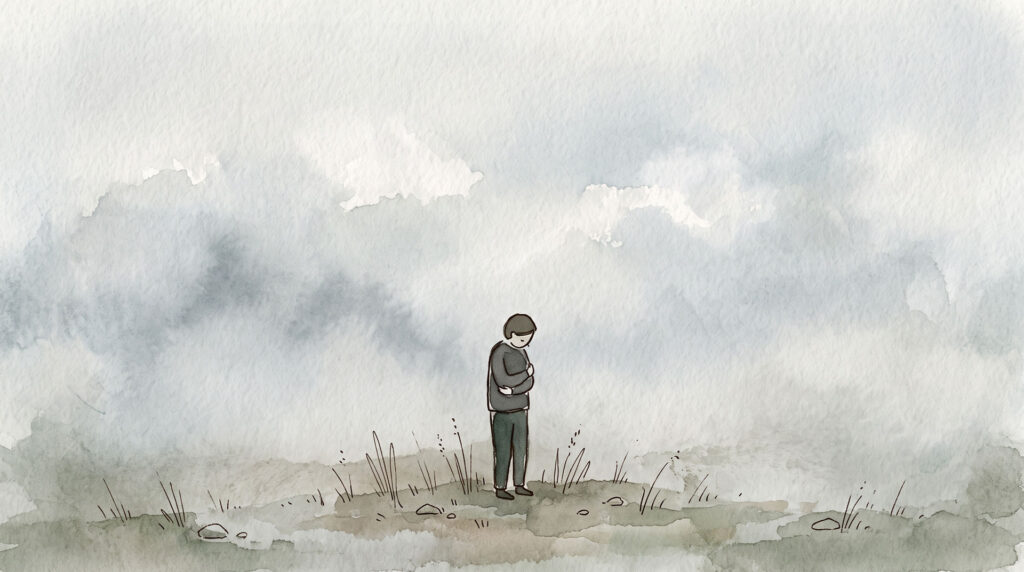
Feeling numb after a death can be part of an early grief response. Especially when a death was sudden, shocking, or hard to take in, you may feel blank, detached, unreal, or as though you are simply going through the motions. Numbness does not mean you did not love the person or that you are grieving the wrong way.
You may expect grief to look like constant crying or overwhelming sadness. Instead, you may be able to organise practical things, answer messages, make cups of tea, or even laugh at a memory, then wonder why you do not feel more? There is no single emotional pattern that proves how much someone mattered to you. Your response is valid.
Is numbness a normal part of grief?
It can be. Shock, disbelief, and emotional numbness are common reactions after a death, particularly early on or after an unexpected loss. A death can change the shape of your life so quickly that it may take time for you to feel anything and catch up with what you know has happened.
Numbness is not the same as being uncaring. It may be the only feeling you can access right now, or it may sit alongside exhaustion, confusion, anger, relief, anxiety, or a strange sense of calm.
The most helpful question is not usually, “Why am I not more upset?” It can be: “What do I need while I am feeling this way?”
What does grief numbness feel like?
Grief numbness can look different from person to person. You may notice that you:
- feel disconnected from your body, surroundings, or everyday life
- cannot fully believe the person has died, even when you know it is true
- move through practical tasks on autopilot
- struggle to cry, speak, decide, or respond to people
- feel flat when others expect you to be devastated
- avoid looking at photos, messages, belongings, or places connected with the person
- feel tired but unable to rest
- have sudden moments when the loss feels real, then feels far away again
Not every experience on this list will be yours. You may feel several emotions in the same day, or very little at all. Grief does not move in a neat sequence.
Does feeling numb mean I did not love them enough?
No. Love is not measured by the volume of your emotions in the first days, weeks, or months after a death.
Some people cry immediately. Some become very practical. Some feel empty. Some feel anger, guilt, relief, or a mixture of all of these. The relationship itself may have been close, complicated, distant, loving, difficult, or unfinished. Your response can hold all of that history.
It is also possible to be deeply affected by a death without being able to show it in a way other people recognise. You do not need to perform grief for family, friends, social media, or anyone else.
Why might the feelings come later?
Sometimes the first stage after a death is full of decisions, visitors, travel, paperwork, rituals, family responsibilities, or the effort of getting through one day at a time. When life becomes quieter, feelings may become easier to notice.
You might find yourself crying after the funeral, feeling angry months later, or becoming emotional during an ordinary moment such as hearing a song, passing a familiar place, or wanting to send the loved one a message. That does not mean your grief has started late or that you are going backwards. It may mean the loss is becoming real in a different way.
Grief can change as your life changes around it. There is no fixed timetable, and there is no prize for appearing unaffected.
What can I do when I feel nothing?
You do not have to force yourself to cry, talk, or feel something profound. Trying to make grief happen on command can add pressure to an already difficult time.
Instead, focus on small acts of care:
- Keep the basics close. Eat what you can, drink water, rest when possible, and take a short walk or step outside.
- Use simple words. If “I am numb” is all you can say, that is enough. You do not need a polished explanation.
- Let one safe person know. You might say, “I do not know what I feel yet, but I am having a hard time.”
- Lower unnecessary demands. If you can postpone a non-urgent decision, social plan, or difficult conversation, give yourself room.
- Choose a gentle point of connection. This could be lighting a candle, sitting with a photo for a minute, visiting a place, saying a prayer, or writing one sentence to the person who died.
- Notice without judging. If sadness, anger, or relief appears later, you do not have to decide what it says about you. You can let it be one part of a much bigger experience.
The goal is not to force numbness away. It is to make the day a little more manageable while you find your footing.
What if I feel numb around everyone else?
People often have expectations about what grief should look like. You may feel pressure to be composed, to comfort others, to explain the death, or to react in a certain way at a funeral or family gathering.
You are allowed to take a break, step outside, decline a conversation, or say, “I cannot talk about this right now.” You are also allowed to accept support without knowing how to respond perfectly.
If you are supporting children or other family members while grieving yourself, the pressure can be even greater. Try to find one place where you do not have to be the strong one. Whether that is a friend, family member, grief group, spiritual leader, or qualified professional. Regardless of who they are as long as you feel safe with your relationship with the person.
What do I not need to force?
You do not need to make yourself visit a place, sort belongings, return to work, explain the death, or talk about the person before you are ready. Some practical decisions cannot wait, but many do not need to be made in the first rush of loss.
You also do not need to compare your response with a sibling, partner, friend, or the person who seems “strongest” in the room. Two people can lose the same person and be carrying different relationships, responsibilities, memories, and fears.
If someone pressures you to feel, forgive, move on, or be grateful before you are ready, it is okay to step back. Gentleness is not avoidance. It can be a way of giving yourself enough room to respond honestly.
How can I talk about it when I do not know what I feel?
You may not have words for the death yet. That can make messages, condolences, family gatherings, and ordinary conversations feel harder than expected. You do not owe anyone a detailed account of your feelings.
A few simple responses can protect your energy:
- “I am still taking it in.”
- “I do not really know how I feel today.”
- “Thank you for asking. I cannot talk for long, but I appreciate it.”
- “I need practical help more than advice right now.”
- “Could we talk about something else for a little while?”
If you are worried people will misunderstand your numbness, you can say so plainly: “I know I seem quiet. I am affected; I just do not have many words yet.” The people who care about you do not need you to make grief easier for them to witness.
What if numbness changes into something else?
Numbness may not stay the same. You might feel nothing for a while, then be surprised by anger, guilt, sadness, longing, anxiety, or exhaustion. You might have one intense moment and then return to feeling flat. A shift in feelings does not mean you have failed to cope or that you should have reacted differently sooner.
When a strong feeling arrives, try to meet it in the same small way you meet numbness: name it, take care of the basics, and decide whether you need company, quiet, or more help. You do not have to understand every feeling before you are allowed to take it seriously.
When does numbness need more support?
Numbness on its own does not tell you that anything is wrong. But you deserve additional support if grief is staying severe, feels impossible to carry, or is significantly affecting your ability to manage everyday life.
Consider speaking with a GP, bereavement service, or qualified mental-health professional if you are:
- unable to manage essential daily tasks for a sustained period
- increasingly isolated or unable to connect with anyone
- relying on alcohol, drugs, or risky behaviour to get through the day
- experiencing intense distress that is not easing or is becoming harder to manage
There are clinical criteria professionals use when assessing prolonged grief, but you do not need to wait for a label or a timeline before asking for help. Support is allowed early.
You do not have to have the “right” reaction
A death can leave you feeling devastated, numb, restless, angry, practical, quiet, or all of these at different times. Your grief may not look like someone else’s, and it does not have to.
For now, you do not need to decide whether you are doing grief correctly. It can be enough to acknowledge that something enormous has happened, make space for your own response, and accept support when you need it.
FAQ
- How long does numbness last after someone dies? There is no fixed timeline. Numbness may change as the shock settles, practical demands reduce, or the reality of the loss reaches you in new moments. If it remains severe or is making everyday life very difficult, speak with a GP or qualified mental-health professional.
- Is it normal to feel numb at a funeral? Yes. Funerals can bring intense pressure, noise, people, decisions, and expectations. Some people cry; others feel detached or focused on getting through the day. Neither reaction is a measure of love.
- Can grief make you feel numb and anxious at the same time? Yes. Grief can hold more than one feeling at once. You may feel emotionally flat while also having racing thoughts, poor sleep, worry, or a sense that life is unreal.
- Will I eventually feel the loss more? You may. Feelings can change as time passes and different parts of life bring the person’s absence into focus. But there is no required emotional schedule. Be gentle with yourself rather than waiting for a particular reaction to prove that you cared.
References
- Bonanno, G. A., Wortman, C. B., Lehman, D. R., Tweed, R. G., Haring, M., Sonnega, J., Carr, D., & Nesse, R. M. (2002). Resilience to loss and chronic grief: A prospective study from preloss to 18-months postloss. Journal of Personality and Social Psychology, 83(5), 1150–1164. https://doi.org/10.1037/0022-3514.83.5.1150
- National Cancer Institute. (n.d.). Grief, bereavement, and loss (PDQ®)–Patient version. https://www.cancer.gov/about-cancer/advanced-cancer/caregivers/planning/bereavement-pdq
- Prigerson, H. G., Boelen, P. A., Xu, J., Smith, K. V., & Maciejewski, P. K. (2021). Validation of the new DSM-5-TR criteria for prolonged grief disorder and the PG-13-Revised (PG-13-R) scale. World Psychiatry, 20(1), 96–106. https://doi.org/10.1002/wps.20823
Find Your Safe Space Today
If you're carrying your own grief, or want support showing up for someone you love, you don't have to figure it out alone.
Kevin built this practice because he once needed it himself. Whatever you're holding, you're welcome to bring it here.
No commitment. Completely confidential.
- ✉ Send Kevin a message
- 🌏 Online sessions — Australia & Philippines
- 🔒 All communications are confidential
