 Skip to main content Skip to footer
Is It Bad to Feel Relieved When Someone Dies?
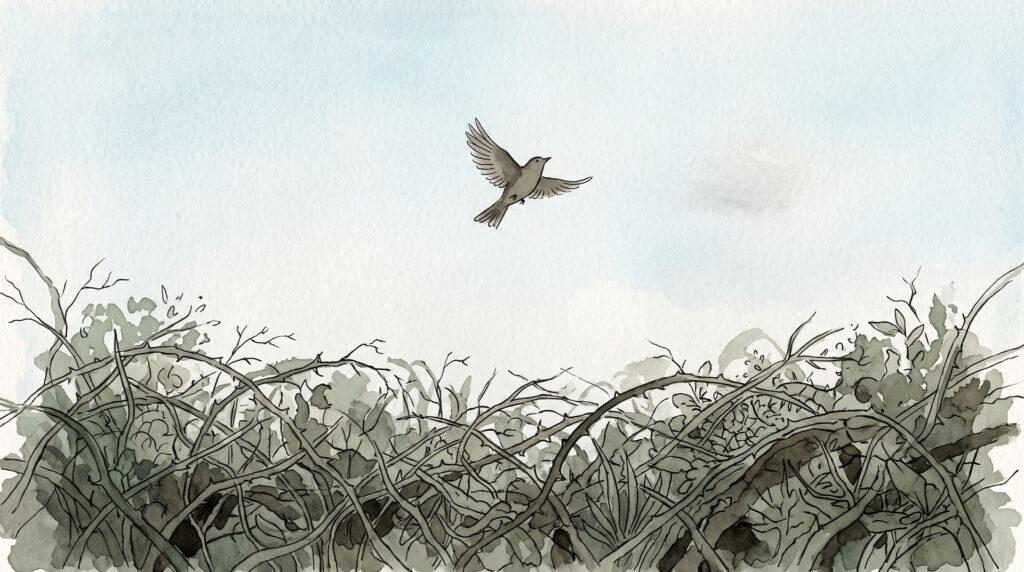
No. Feeling relieved when someone dies does not make you bad, especially after a long illness, pain, caregiving, conflict, uncertainty, or fear. The feeling of relief does not mean you wanted them gone, loved them less, or have nothing to grieve. It may simply mean that something unbearable has ended.
The sense of relief can be startling because death is supposed to produce one acceptable emotion: sadness. When relief appears instead, or appears right alongside sorrow, it can feel like evidence against your own character. You may catch yourself thinking, What kind of person feels this? Or you may say nothing because everyone around you seems devastated in a way that looks simpler and more recognisable.
But grief is rarely simple. A person can be deeply loved and their situation can also have been painful, frightening, exhausting, or complicated. Both truths can exist without cancelling each other out.
Why relief can arrive when someone dies
Relief often has a very human source: a strain has ended.
Perhaps you had spent months watching someone you loved suffer. Perhaps every phone call made your stomach drop. Perhaps you were caring for them while trying to work, parent, sleep, and keep ordinary life going. Maybe there was no clear prognosis, only another appointment, another deterioration, another decision. When losing someone, the vigilance can suddenly stop.
That pause can register in the body before the mind has found words for it. Your shoulders may lower. You may sleep for several hours. You may notice that you are no longer waiting for the next call. None of this is a verdict on your love. It is a response to a burden finally changing shape.
Relief can also come when death ends the suffering of the person who died. You may feel grateful that they are no longer in pain, frightened, confused, or trapped in a body that could no longer do what it once did. That gratitude can be tender and heartbreaking at the same time.
For some people, relief relates less to illness and more to the relationship itself. A parent, partner, sibling, or other loved one may have been difficult, unavailable, volatile, or harmful. Having a loved one die may end the possibility of another argument, demand, disappointment, or attempt to earn their approval. The relief can be real even when the loss is real.
Relief and sadness can belong in the same room
A common mistake is to treat emotions as if they must line up neatly: first shock, then sadness, then acceptance. Real grief does not work that way. It can be a mix of emotions, move between feelings, bring several at once, or seem to contradict itself from one hour to the next.
You might feel relieved that the medical ordeal is over, then suddenly ache for the person’s voice. You might be thankful they are no longer suffering, then feel angry that they had to suffer at all. You might feel calm during the funeral arrangements and fall apart later while doing something ordinary.
These shifts are not proof that you are grieving incorrectly. They are often part of adjusting to a life that has changed. Grief asks us to face both the person’s absence and the practical reality that remains. Some moments pull us toward the loss; others pull us toward daily life, responsibilities, rest, and small signs of relief. Moving between those places is not betrayal.
If you have also felt emotionally blank, it may help to understand why numbness can happen after a death. Numbness, relief, sadness, and love can all be different ways a mind and body respond when too much has happened.
“I feel relieved, so why do I feel guilty?”
Guilt often rushes in after relief because it tries to make a moral equation out of an emotional response. It says: If I loved them, I should only feel devastated. Or: If I am relieved, I must have failed them.
But feelings are not actions. A feeling can tell you that a difficult chapter ended; it does not tell the whole story of how you showed up, what you endured, or how much you cared.
Sometimes guilt is tied to a specific thought:
- “I should have visited more.”
- “I was impatient near the end.”
- “Part of me wanted this to be over.”
- “I have a little more space in my life now, and that feels wrong.”
- “Other people are crying harder than I am.”
It can help to slow these thoughts down rather than argue with yourself in broad, punishing terms. Ask: What exactly am I accusing myself of? Is this regret, sadness, responsibility, or a fear of what my relief says about me?
Regret deserves honesty. There may be things you wish had gone differently. Yet wishing you had done something differently is not the same as being wholly at fault. And wanting an unbearable situation to end is not the same as wanting a person not to exist.
For a closer look at the self-blame that can appear after loss, you may find guilt in grief useful. The goal is not to talk yourself out of caring. It is to stop using care as a weapon against yourself.
When caregiving ends, the emptiness can be its own loss
If you were a caregiver, relief may be followed by a strange gap. Your days may have been organised around medication, appointments, meals, messages, transport, or constant checking. Even when those tasks were draining, they gave your life a rhythm and a role.
When the role ends, people sometimes expect to feel free. Instead, they may feel aimless, lonely, or guilty for noticing the extra time. They may miss the person and miss the purpose of caring for them. They may not know who they are without the next task.
Try not to demand an immediate answer to that identity change. You do not need to turn the newly available space into a project or a lesson. At first, it may be enough to notice what your days actually feel like and to give them a little structure: eat at regular times, take a walk, reply to one message, rest without having to earn it.
Caregiving can contain love, resentment, duty, tenderness, fatigue, and devotion. The end of it can contain relief and grief. Naming this complexity is kinder than forcing yourself into a single story.
Relief after a difficult relationship does not erase the loss
Not every loss comes after a close or peaceful relationship. Someone may have been emotionally distant, controlling, cruel, addicted, unpredictable, or simply unable to give what you needed. Death can bring an end to the tension while also closing the door on repair, explanation, or the relationship you hoped might one day exist.
That is a particular kind of grief. You may be mourning the person, the safer relationship you never had, the childhood you wanted, or the possibility that things could still change. Relief may sit beside anger, sadness, numbness, and even a feeling of nothing at all.
You do not have to make the person perfect because they died. You also do not have to make them entirely bad in order to justify your relief. A more honest sentence might be: Parts of this relationship hurt me, and their death still matters to me.
If the loss involves someone who was alive but unavailable or distant before their death, the themes can overlap with grieving someone who is still alive. In both situations, grief may include the loss of what was and what could not become.
What to do with the feeling instead of judging it
You do not have to celebrate relief, defend it, or get rid of it. You can simply make enough room to understand it.
Name what the relief is about
Try finishing this sentence privately: I feel relief because…
The answer may be, “because they are no longer in pain,” “because I am not waiting for bad news,” “because I can finally sleep,” or “because I am no longer afraid of the next confrontation.” Specific words make the feeling less like a dark secret and more like information about what has been hard.
Let the whole sentence be true
Add a second line: And I also feel…
You might write: “I feel relief because the hospital visits are over. And I also miss my dad.” Or: “I feel relief because I do not have to manage their anger anymore. And I also feel sad that there will be no apology.”
This is not a trick to make the feelings balance. It is a way to stop pretending that only one is allowed.
Choose one person who can hold complexity
You may not want to tell everyone. Some people will hear “relief” and rush to reassure, correct, or judge. If you share, choose someone who can listen without demanding that you simplify the relationship or your response.
You could say, “There is sadness, but there is relief too, and I feel confused about that.” You do not need a polished explanation.
Give your body a transition
After prolonged stress, the body may keep acting as if it must stay alert. Gentle routines can help mark the change: a shower before bed, food that is easy to prepare, a short walk at the same time each day, putting away one caregiving item when you are ready, or sitting quietly without another task to manage.
These are not ways to fix grief. They are small ways to tell yourself that the intense period is no longer happening in the same way.
Avoid using productivity as proof that you are fine
Relief can produce energy. You may suddenly clean, organise, work more, or make plans. That can be useful, but it does not mean the loss has passed through you already. Leave room for the feelings that may arrive later, especially around quiet moments, anniversaries, paperwork, familiar places, or ordinary habits you once shared.
You do not owe anyone a performance of grief
People grieve differently because the relationship, the death, their culture, their responsibilities, and the circumstances leading up to the loss are different. Some people cry immediately. Some become practical. Some go numb. Some feel relief first and sadness later. None of these responses gives outsiders a reliable measure of love.
You may also feel pressure from family members whose experience was different from yours. They may have had a gentler relationship, carried less caregiving, or held different hopes. You do not need to compare the depth of your grief with theirs. Your task is to be truthful about your own experience without making another person’s grief wrong.
A useful question is not, Am I sad enough? It is, What is this loss asking me to acknowledge? The answer may include affection, exhaustion, unresolved pain, gratitude, anger, or the simple fact that you have been carrying more than anyone saw.
When relief changes over time
Relief is not always permanent. It may be strongest in the first days or weeks, when a difficult vigil or caregiving period has ended. Later, when routines settle and the finality becomes clearer, longing or sadness may become more present.
The reverse can happen too: a person may feel devastated at first and later find moments of peace, gratitude, or relief. There is no correct order. What matters is allowing your feelings to change without treating each new one as a contradiction of the last.
Grief is not a test you pass by feeling the right thing at the right time. It is a process of living with a loss while learning what it means in your own life. If relief is part of that process, it is worth listening to with compassion rather than shame.
FAQ
- Is it normal to feel relief when a parent dies? Yes. Relief can be especially understandable when a parent had a long illness, needed extensive care, was in pain, or the relationship carried conflict or unresolved hurt. It can exist alongside love, sadness, and missing them.
- Does feeling relief mean I did not love them? No. Relief often relates to the end of suffering, fear, responsibility, or tension. Love and relief are not opposites, and neither feeling cancels the other.
- Why do I feel relief before sadness? Your mind and body may first register that an intense period has ended. Sadness may come later, come in waves, or sit beside the relief from the beginning. There is no required timetable.
- Should I tell my family that I feel relieved? Only if it feels safe and helpful. You are not obliged to share a vulnerable feeling with people who may misunderstand it. A trusted person who can hold the complexity may be a better place to start.
References
- Cruse Bereavement Support. (2025). Effects of grief. https://www.cruse.org.uk/understanding-grief/effects-of-grief/
- National Cancer Institute. (n.d.). Grief, bereavement, and loss (PDQ®)–Patient version. https://www.cancer.gov/about-cancer/advanced-cancer/caregivers/planning/bereavement-pdq
- Stroebe, M., & Schut, H. (1999). The dual process model of coping with bereavement: Rationale and description. Death Studies, 23(3), 197–224. https://doi.org/10.1080/074811899201046

Find Your Safe Space Today
If you're carrying your own grief, or want support showing up for someone you love, you don't have to figure it out alone.
Kevin built this practice because he once needed it himself. Whatever you're holding, you're welcome to bring it here.
No commitment. Completely confidential.
- ✉ Send Kevin a message
- 🌏 Online sessions — Australia & Philippines
- 🔒 All communications are confidential
