 Skip to main content Skip to footer
Why Does Grief Come in Waves?
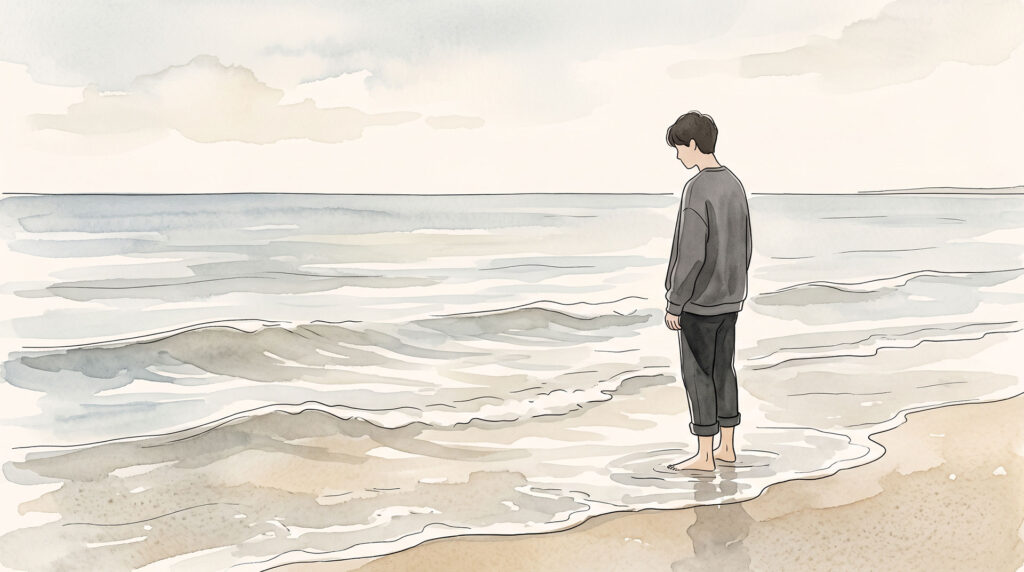
Grief comes in waves because your mind and body cannot process a surge of emotions all at once. Some days you may feel steady, almost normal, and then a smell, a song, a date, a place, or a quiet moment can bring the pain rushing back. This does not mean you are going backwards. There’s an ebb and flow in the mourning. It often means your grief is moving in the only way it can: a little at a time.
When people say grief comes in waves, they usually mean the pain is not constant in the same way every day. It rises and falls. It changes shape. It can feel calm one moment and you’re struggling the next. You might laugh with a friend, then cry in the car. You might feel okay for a week, then suddenly miss them so much it feels like the loss just happened.
That rhythm can be confusing, especially if part of you thought healing would be a straight line. But grief is rarely linear. It often moves between remembering and resting, feeling and functioning, aching and adapting.
If your grief feels like it keeps knocking you down, you do not have to carry it alone. My grief support sessions are a safe space to talk through the waves without being rushed, judged, or told to “move on.” Healing isn’t linear, don’t expect it to.
Grief: why does grief come in waves instead of fading neatly?
Grief comes in waves because loss touches many parts of your life at different times.
When someone important dies, or when you lose a relationship, role, home, future, or version of life you loved, you are not only grieving one event. You are grieving many reminders. You grieve the person. You grieve the routines. You grieve what you expected to happen. You grieve the conversations you still want to have. You grieve the version of yourself who existed before the loss.
That is why grief may feel quiet while you are busy, then suddenly rise when the day slows down. Your body may be able to function at work, answer messages, or get through errands, but grief waits in the background until something opens the door.
A wave can be triggered by something obvious, like birthdays, anniversary, holiday, photo, or visit to a familiar place. But sometimes the trigger is subtle. It may be the weather. A meal. A phrase they used to say. A song playing in a supermarket. A moment when you reach for your phone and remember they are not there.
This is one reason grief can feel so disorienting. You may think, “I was doing better. Why am I crying again?” But crying again does not erase the progress you made. It may simply mean another part of the loss is asking to be felt.
Grief comes in waves: does this mean I am not healing?
No. Grief coming in waves does not mean you are failing to heal.
Healing does not mean you stop missing the person. It does not mean you never cry. It does not mean every memory becomes easy. Healing often means the waves become more survivable. They may still arrive, but over time, many people notice they can breathe through them, name what is happening, and return to life more gently afterwards.
At first, grief may feel like being dragged underwater. You may not know when the next wave is coming, how big it will be, or whether you can handle it. Later, the waves may still hurt, but you begin to recognize them. You learn what helps. You learn who is safe to talk to. You learn which days need more care. You learn that a painful day is not the same as a hopeless life.
Sometimes healing looks like:
- remembering them without immediately breaking down;
- being able to tell a story about them and smile;
- crying, but not feeling ashamed of crying;
- feeling sadness and still eating, showering, working, or resting;
- noticing small moments of peace without feeling guilty;
- understanding that missing them is part of love, not proof that you are stuck.
A wave of grief may be painful, but it is not automatically a setback. Often, it is part of how your system gradually makes room for the reality of the loss.
Waves of grief: why do I feel okay one day and broken the next?
You can feel okay one day and broken the next because grief is affected by stress, sleep, support, memories, hormones, responsibilities, anniversaries, and how much emotional energy you have left. Everyone grieves differently.
Some days, your nervous system has more capacity. You slept enough. You spoke to someone kind. You had structure. You felt held by routine. The grief was still there, but it did not take over the whole day.
Other days, your capacity is lower. You are tired. Something reminded you of them. You had to make a decision they used to help with. You saw other people living the life you thought you would have. You passed a place connected to them. Suddenly, grief feels louder.
This is especially common after a major loss because your life keeps asking you to function while your heart is still trying to understand what happened.
You may have a good morning and a terrible evening. You may feel peaceful at work and collapse when you get home. You may enjoy a meal with friends and then feel guilty afterwards. This back-and-forth can feel strange, but it is common.
Grief does not always respect your calendar. It moves with meaning. The moments that mattered are often the moments where the waves return.
Triggers: what can bring a grief wave back suddenly?
A grief wave can be triggered by anything your mind or body associates with the person, the loss, or the life you had before.
Common grief triggers include:
- birthdays, anniversaries, holidays, and special dates;
- seeing their name, photo, belongings, or handwriting;
- hearing their favourite song or a familiar voice;
- visiting a place connected to them;
- changes in family roles or routines;
- major life events they are not there to witness;
- dreams about them;
- seeing someone who looks like them;
- a familiar scent, meal, phrase, or habit connected to them;
- quiet moments when you are no longer distracted.
Sometimes the trigger is not a memory but an absence. Their empty chair. Their side of the bed. The message you cannot send. The update you would have told them first. The silence where their presence used to be.
This is why grief can appear “out of nowhere.” It may not actually be nowhere. Your body may have noticed something before your conscious mind caught up.
When a grief wave hits, it can help to gently ask:
“What did this moment remind me of?”
Not to overanalyze yourself, but to understand what part of your love or loss has been touched.
Healing process: why grief needs both feeling and resting
The healing process often involves moving between feeling the loss and taking breaks from the loss.
Some grief researchers describe bereavement as an oscillation: we move between loss-oriented moments and restoration-oriented moments. In simpler words, sometimes we face the pain directly, and sometimes we focus on life tasks, distractions, routines, responsibilities, or rebuilding.
Both matter.
Loss-oriented moments may include crying, remembering, talking about the person, looking at photos, feeling anger, missing them, or asking painful questions.
Restoration-oriented moments may include working, cleaning, caring for children, seeing friends, exercising, learning new routines, making decisions, or slowly building a life that has changed.
You are not supposed to stay in the deepest pain all day every day. You are also not supposed to avoid the loss forever. Grief often asks for a rhythm: touch the pain, then breathe; remember, then rest; feel, then function; break down, then be held.
This is one reason grief comes in waves. Your system may only be able to process pieces of the loss at a time.
That does not make you weak. It makes you human.
Missing someone: why can a small reminder hurt so much?
A small reminder can hurt so much because grief is not only about the past. It is also about the future you expected.
A cup on the shelf can remind you of morning conversations. A song can remind you of a season of life. A birthday can remind you of all the birthdays still to come without them. A simple errand can remind you of who used to sit beside you, call you, advise you, or make ordinary life feel less lonely.
The size of the trigger does not always match the size of the grief wave.
A tiny reminder can carry a whole world of meaning.
This is why people sometimes feel embarrassed by what sets them off. They may think, “Why am I crying over this small thing?” But it is rarely just the small thing. It is the person. The bond. The story. The unfinished sentence. The love that has nowhere obvious to go.
When you miss someone deeply, ordinary objects can become emotional doorways.
Grief and guilt: why do I feel guilty when I have a good day?
You may feel guilty when you have a good day because part of you worries that feeling okay means you are forgetting them, betraying them, or moving on too quickly.
But having a good day does not mean your grief was fake. Laughing does not mean you loved them less. Feeling calm does not mean you are done grieving. Enjoying a moment does not erase your loss.
Sometimes guilt appears when life begins to make room for pleasure again. You may notice yourself smiling, resting, eating well, making plans, or feeling interested in something — and then a thought arrives: “How can I feel okay when they are gone?”
That guilt is understandable, but it does not need to be obeyed.
Love does not require constant suffering as proof. You are allowed to have moments of relief. You are allowed to breathe. You are allowed to live while still carrying them with you.
A gentler thought might be:
“I can miss them and still receive this moment of peace.”
Both can be true.
Anniversaries: why do grief waves get stronger around important dates?
Grief waves often get stronger around anniversaries and important dates because your body remembers what the calendar represents.
The anniversary of the death, a birthday, a holiday, Mother’s Day, Father’s Day, Christmas, New Year, a diagnosis date, a funeral date, or a meaningful family tradition can bring grief closer to the surface.
Sometimes the days before the date are harder than the date itself. You may feel anxious, tired, irritable, tearful, or emotionally heavy without immediately realizing why. Then you look at the calendar and understand.
This is sometimes called an anniversary reaction. It does not mean you are back at the beginning. It means your mind and body are responding to a meaningful marker.
It can help to plan gently around these dates:
- lower your expectations of productivity;
- decide whether you want company or quiet;
- create a simple ritual if that feels right;
- visit a place, light a candle, cook their favourite food, write a letter, or say their name;
- let trusted people know the date may be hard;
- give yourself permission to feel more sensitive than usual.
You do not have to “perform strength” on painful dates. You can prepare for them with tenderness.
Coping: what should I do when a grief wave hits?
When a grief wave hits, the goal is not to force it away. The goal is to help yourself stay safe and supported while it moves through.
You might try:
- placing one hand on your chest and breathing slowly;
- naming what is happening: “This is a grief wave”;
- drinking water or eating something small;
- stepping outside for air or sunlight;
- texting someone safe;
- writing the thought you wish you could say to the person;
- letting yourself cry without judging it;
- choosing one grounding object in the room and describing it;
- wrapping yourself in a blanket;
- taking a shower;
- postponing major decisions until the wave passes.
A grief wave can feel endless while you are inside it, but waves usually change. They rise, peak, and soften. You do not have to solve your whole grief in that moment. You only have to support yourself through the next few minutes.
If the wave is intense, try asking:
“What do I need for the next ten minutes?”
Not the next year. Not the rest of your life. Just the next ten minutes.
Support: when should I get help with grief that comes in waves?
You may want extra support if the waves feel unbearable, unsafe, isolating, or like they are stopping you from living for a long time.
Grief itself is not a problem to be fixed. It is a natural response to loss. But sometimes grief becomes too heavy to carry alone, especially when the death was sudden, traumatic, complicated, unresolved, or connected to other painful experiences.
Consider reaching out for support if:
- you feel unable to function for an extended period;
- you are avoiding everything connected to the loss;
- you feel stuck in guilt, anger, regret, or numbness;
- you have no safe person to talk to;
- your grief is affecting sleep, appetite, work, or relationships severely;
- you feel like life has no meaning without them;
- you are using alcohol, substances, or risky behaviours to cope;
- you feel overwhelmed by thoughts of not wanting to be here.
If you feel at risk of harming yourself or you may not be safe, please contact emergency services or a crisis line in your country right away. You deserve immediate support.
For non-crisis grief support, talking to someone can help you understand the waves, make space for the love underneath them, and find steadier ways to carry the loss.
You are welcome to book a grief support session with me if you want a safe, compassionate space to talk through what you are carrying.
Acceptance: does accepting grief mean I have to move on?
No. Acceptance does not mean forgetting, approving of the loss, or leaving the person behind.
Acceptance means slowly recognizing the reality of what happened while learning how to live with that reality. It means you stop fighting the fact that grief exists. It means you begin to make space for both love and life.
You may still miss them. You may still cry. You may still have hard days. But acceptance can look like being able to say:
“This happened, and I hate that it happened, and I am still here.”
Moving forward does not mean moving away from love. Often, it means finding a new relationship with the person you lost — one based on memory, meaning, values, stories, and the ways their life continues to shape yours.
The waves may still come. But over time, you may learn that you can survive them.
You may even learn that some waves are not only pain. Some are love arriving in another form.
If you want support navigating the waves of grief, I would be honoured to sit with you in that process. You do not need to have the right words. You only need to come as you are.
FAQ
- Is it normal for grief to come in waves? Yes. Many people experience grief as waves rather than a straight line. You can feel okay one day and deeply sad the next.
- Why does grief hit me randomly? Grief can be triggered by memories, dates, places, smells, songs, routines, or moments of quiet. Sometimes your body notices the reminder before your mind does.
- Does crying again mean I am not healing? No. Crying again does not mean you are back at the beginning. It may mean another part of the loss is being felt.
- Why do I feel worse around birthdays or anniversaries? Important dates can bring the loss closer to the surface. Your body and memory may respond even before the date arrives.
- Can grief come back years later? Yes. Grief can return years later, especially during milestones, major life changes, anniversaries, or moments when you wish the person were there.
- How do I calm down during a grief wave? Try naming it, breathing slowly, grounding yourself in the room, drinking water, texting someone safe, or asking what you need for the next ten minutes.
- Should I see a grief counsellor if grief comes in waves? You do not need support because grief comes in waves — that can be normal. But if the waves feel unbearable, isolating, unsafe, or impossible to manage alone, grief support can help.
References
- Stroebe, M., & Schut, H. (1999). The Dual Process Model of Coping with Bereavement: Rationale and Description. Death Studies. https://doi.org/10.1080/074811899201046
- Fiore, J. (2021). A Systematic Review of the Dual Process Model of Coping With Bereavement (1999–2016). Omega: Journal of Death and Dying. https://doi.org/10.1177/0030222819893139
- Bonanno, G. A. (2011). Resilience to Loss and Potential Trauma. Annual Review of Clinical Psychology. https://doi.org/10.1146/annurev-clinpsy-032210-104526
- Shear, M. K. (2010). Complicated Grief Treatment. Bereavement Care. https://doi.org/10.1080/02682621.2010.522373
- NCBI Bookshelf. Grief and Prolonged Grief Disorder. StatPearls. https://www.ncbi.nlm.nih.gov/books/NBK507832/
Find Your Safe Space Today
If you're carrying your own grief, or want support showing up for someone you love, you don't have to figure it out alone.
Kevin built this practice because he once needed it himself. Whatever you're holding, you're welcome to bring it here.
No commitment. Completely confidential.
- ✉ Send Kevin a message
- 🌏 Online sessions — Australia & Philippines
- 🔒 All communications are confidential
