 Skip to main content Skip to footer
Why Does Grief Make You So Angry?
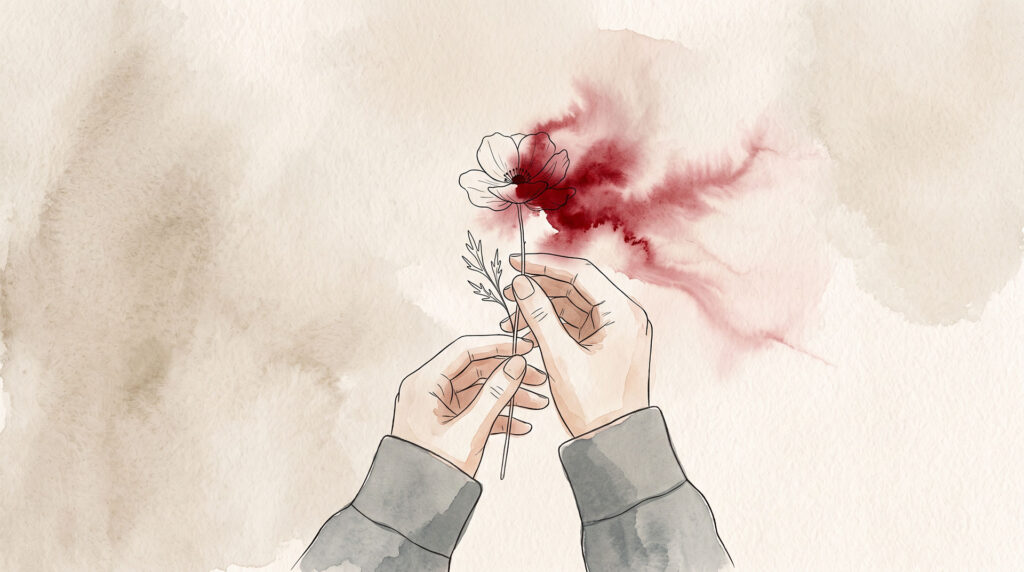
Grief can make you feel angry because loss often leaves you mourning with pain that has nowhere obvious to go. You may feel angry at the person who died, angry at yourself, angry at family, angry at doctors, angry at God, angry at the world, or angry that life keeps moving when yours has been changed forever.
That anger can feel frightening, especially if you are usually gentle, patient, or conflict-avoidant. You might experience irritability and snap at people you love, feel triggered by small things, resent others for being happy, or think, “Why am I so angry when I’m supposed to be sad?”
But anger is a common part of grief. It does not mean you are a bad person. It does not mean you loved them less. Often, anger is one of the ways your mind and body try to respond to something that feels unfair, final, and impossible to control.
If grief is making you get angry, you do not have to be ashamed of it. The anger in grief may be trying to protect something tender underneath: love, helplessness, fear, regret, loneliness, or the pain of missing someone who mattered.
If your anger feels too heavy that you can’t control it, my grief support sessions are a safe space to talk through what you are carrying without being judged, rushed, or told to simply “calm down.”
Grief anger: why does grief make you so angry?
Grief can make you angry because loss violates your sense of how life was supposed to be.
When someone important dies, or when your life changes through a painful loss, your mind may keep reaching for an explanation. Why did this happen? Why them? Why now? Why did no one stop it? Why didn’t I know? Why didn’t I do more? Why is everyone else acting normal?
Anger comes when reality feels unacceptable.
Sadness says, “I miss them.”
Anger says, “This should not have happened.”
Both can be true.
Grief anger can also come from helplessness. Death and loss can make you feel powerless. There may be no person to confront, no problem to solve, no way to reverse what happened. So the emotional energy searches for a target. Sometimes it lands on other people. Sometimes it lands on yourself. Sometimes it lands on the person who died. Sometimes it lands on life itself.
This does not mean your grief and anger is always fair or always accurate. But it does mean your anger may be carrying important information. It may be pointing toward pain that has not had enough space yet.
Anger after loss: who are you actually angry at?
After a loss, anger can attach itself toward others and even at many different targets.
You may feel angry at doctors, nurses, hospitals, relatives, friends, siblings, partners, yourself, the person who died, or people who seem to have disappeared after the funeral.
Sometimes the anger has a clear reason. Someone was careless. Someone said something cruel. Someone was absent when you needed them. Someone made the situation harder.
Other times, the anger is less logical. You may be angry at people simply because they still have what you lost. Their parent is still alive. Their marriage is intact. Their family looks complete. Their life seems untouched.
That kind of anger can bring guilt with it. You may think, “I don’t want to be bitter. I don’t want to resent people. Why can’t I just be happy for them?”
But grief can make other people’s normal life feel unbearable for a while.
It is not because you truly want them to suffer. It is because their ordinary happiness reminds you of your extraordinary pain.
You may also feel angry at the person who died, even if you loved them deeply. Angry that they left. Angry that they did not take care of themselves. Angry that they did not tell you something. Angry that there were unfinished conversations. Angry that you now have to live with the consequences of their absence.
This can feel taboo, but it is human. Love and anger can exist in the same grief.
Angry while grieving: why am I snapping at people I love?
You may snap at people while grieving because your nervous system is already overloaded.
Grief takes energy. Even when you look calm on the outside, your body’s capacity of carrying shock, sadness, fatigue, memories, decisions, tension, stress, and the constant effort of functioning while hurting can be overwhelming.
When your emotional capacity is low, small things can feel much bigger than they normally would.
A harmless question can feel intrusive. A delayed reply can feel like abandonment. A cheerful comment can feel insensitive. A small inconvenience can feel like the final thing you cannot handle.
This does not excuse hurting people, but it can help explain why your reactions feel stronger than usual.
Grief can narrow your window of tolerance. You may have less patience, less flexibility, and less ability to absorb stress. You’re angry because the real pain is too big to speak directly.
Instead of only asking, “Why am I so irritable?” try asking:
“What am I carrying that no one can see?”
That question can help you move from shame of unresolved grief into understanding why you’re grieving.
Anger stage of grief: is anger really one of the stages?
Anger is often described as one of the “stages of grief,” but grief does not usually move through stages in a neat order.
The well-known five stages — denial, anger, bargaining, depression, and acceptance — came from Elisabeth Kübler-Ross’s work with people facing death. Over time, people began applying those stages to bereavement too. Many people do recognize parts of their grief in them, but the stages are not a checklist, timeline, or rulebook.
You do not have to feel anger to be grieving “correctly.”
You also do not have to finish being angry before you are allowed to feel sadness, love, relief, numbness, or acceptance.
Grief is often much messier than that. You might feel acceptance in the morning and rage at night. You might feel angry months later when everyone assumes you should be fine. You might not feel angry at all until a birthday, holiday, or family conflict brings it up.
Anger is not a required stage, but it is a common way of coping with loss.
If anger is part of your grief, it deserves attention — not because it is wrong, but because it may be protecting something vulnerable underneath.
Grief and unfairness: why does loss feel so unjust?
Loss can feel unjust because grief often confronts you with the gap between what happened and what should have happened.
They should have had more time.
You should have had one more conversation.
The diagnosis should have come earlier.
The accident should not have happened.
Your family should have shown up better.
You should not have had to make those decisions.
They should still be here.
Anger often grows in that gap between reality and longing.
Sometimes people try to comfort grievers by saying, “Everything happens for a reason.” But when you are grieving, that can feel dismissive or even cruel. You may not want a reason. You may want the person back. You may want the loss undone. You may want someone to admit that what happened was devastating.
Anger can be the part of you that refuses to minimize the loss.
It says, “This mattered.”
It says, “They mattered.”
It says, “My life has changed, and I am not okay with pretending it hasn’t.”
That kind of anger is not automatically destructive. Sometimes it is grief defending the significance of love.
Guilt and anger: why do I feel angry at myself?
Grief can turn anger inward.
You may replay decisions over and over. You may think about what you said, what you did not say, what you noticed, what you missed, what you should have done sooner, or what you wish you could change.
This can sound like:
- “I should have called.”
- “I should have known.”
- “I should have been there.”
- “I should have pushed harder.”
- “I should have forgiven them.”
- “I should have said goodbye differently.”
- “I should not feel angry at them now.”
Self-directed anger often comes from the mind trying to regain control. If you can blame yourself, then maybe the loss feels less random. Maybe it feels like there was something you could have done. But that does not mean the blame is true.
Regret deserves compassion, not endless punishment.
There may be things you wish had gone differently. There may be apologies you wish you could give. There may be unfinished words. But grief has a way of judging your past self with information your past self did not have.
A gentler question is:
“What did I know at the time, and what was I capable of carrying then?”
That does not erase regret. But it may soften the cruelty of hindsight.
Family conflict: why does grief make relationships harder?
Grief can make relationships harder because everyone grieves differently, and people often expect their grief to be understood without having to explain it.
One person wants to talk about the loss constantly. Another avoids talking because it feels too painful. One person cries openly. Another becomes practical. One person wants rituals. Another wants privacy. One person wants to keep belongings untouched. Another wants to sort them quickly.
None of these differences automatically mean someone does not care.
But when everyone is hurting, differences can feel like betrayal.
You might think:
“Why are they acting so cold?”
“Why are they making this about themselves?”
“Why don’t they understand what I need?”
“Why am I the only one doing everything?”
“Why are they moving on so quickly?”
Grief also brings practical stress: funerals, money, inheritance, caregiving decisions, travel, family roles, old resentments, and unresolved wounds. Anger may rise not only from the death itself, but from everything the death exposes.
If family grief is turning into conflict, it can help to separate two questions:
“What is this person doing that is genuinely hurtful?”
And:
“What part of my grief is needing care right now?”
Both matter. You can set boundaries and still recognize that grief may be intensifying your reactions.
Body and stress: why does grief make me feel irritated all the time?
Grief can make you feel irritated because it affects your body, not only your emotions.
After a major loss, your sleep may change. Your appetite may change. Your concentration may drop. Your body may feel tense, heavy, restless, or exhausted. You may be more sensitive to noise, interruptions, demands, and other people’s expectations.
When your body is under stress, irritation can become easier to access than sadness.
Sadness may feel too vulnerable. Anger may feel more powerful. It can give you energy when you feel helpless. It can create distance when closeness feels overwhelming. It can help you function when collapsing does not feel safe.
But if anger is the only emotion you allow yourself to feel, it can become exhausting.
Sometimes anger is the surface emotion. Underneath it may be:
- fear;
- loneliness;
- helplessness;
- abandonment;
- guilt;
- shame;
- sadness;
- longing;
- love.
You do not need to force yourself to find the “real” emotion immediately. But when anger keeps returning, it may help to ask:
“If this anger could speak honestly, what would it be protecting?”
Coping: what can I do when grief makes me angry?
When grief makes you angry, the goal is not to shame yourself into calmness. The goal is to express the anger safely and understand what it needs.
You might try:
- naming it: “This is grief anger”;
- stepping away before you say something damaging;
- writing the uncensored version in a private note;
- moving your body through walking, stretching, cleaning, or exercise;
- using cold water, slow breathing, or grounding to lower the intensity;
- telling someone safe, “I am angry and I do not need you to fix it”;
- asking what the anger is protecting;
- noticing whether hunger, exhaustion, alcohol, or stress is making it worse;
- apologizing when anger spills onto someone unfairly;
- setting boundaries where the anger is pointing to a real problem.
Anger often needs movement. It may not want a motivational quote. It may not want someone to explain the loss away. It may need a safe outlet, a truthful conversation, a boundary, a cry, or a place where you can admit, “I hate that this happened.”
You are allowed to be angry, it is normal to feel angry.
But you also deserve support so anger does not become the only place your grief can go.
Support: when should I get help for grief anger?
You may want extra support if your anger feels constant, frightening, destructive, or impossible to control.
Grief anger can be normal, but it can become harmful if it begins damaging your relationships, work, health, safety, or sense of self.
Consider reaching out for support if:
- you are frequently snapping at people and cannot stop;
- your anger feels out of proportion but still uncontrollable;
- you feel consumed by blame, resentment, or revenge fantasies;
- you are using alcohol, substances, or risky behaviour to cope;
- you feel stuck in guilt or regret;
- your anger is hiding thoughts of hopelessness;
- you feel like you might hurt yourself or someone else.
If you feel at risk of harming yourself or another person, please contact emergency services or a crisis line in your country right away. You deserve immediate support with your new reality.
For non-crisis grief support, talking to someone can help you slow the anger down enough to hear what is underneath it. Sometimes the anger needs words. Sometimes it needs boundaries. Sometimes it needs permission to exist without taking over your whole life.
If you want a safe space to process anger after loss, you are welcome to book a grief support session with me. You do not need to arrive calm or perfectly composed. You can bring the anger, the sadness, the guilt, the confusion, and the love that still has nowhere easy to go.
Acceptance: does letting go of anger mean the loss was okay?
No. Letting go of anger does not mean the loss was okay.
It does not mean what happened was fair. It does not mean the person mattered less. It does not mean you approve of what happened. It does not mean you are forgetting them.
Sometimes people hold onto anger because it feels like the last defence against the wrongness of the loss. If you stop being angry, part of you may fear you are saying, “It was fine.”
But peace is not the same as approval.
You can slowly release the grip of anger while still honouring the truth that the loss mattered.
Acceptance may sound like:
“This should not have happened, and I cannot change that it did.”
“I am angry because I loved them.”
“I can honour them without punishing myself forever.”
“I can carry the unfairness without letting it destroy the rest of my life.”
Anger may be one chapter of grief, but it does not have to be the whole story. Underneath it, there may still be love, longing, memory, meaning, and eventually, a little more room to breathe.
FAQ
- Is anger a normal part of grief? Yes. Anger can be a normal part of grief, especially when the loss feels unfair, sudden, preventable, or deeply life-changing.
- Why am I angry at the person who died? You may feel angry because they left, because things were unfinished, or because their absence changed your life. This does not mean you did not love them.
- Does anger mean I am grieving wrong? No. Grief is not a neat process. Anger, sadness, numbness, guilt, relief, and longing can all appear at different times.
- Why do I keep snapping at people after a loss? Grief can overload your nervous system, reduce patience, disturb sleep, and make small stressors feel much harder to handle.
- What is underneath grief anger? Often, grief anger protects pain, helplessness, guilt, fear, loneliness, or love. Anger may be the emotion your body can access first.
- How do I calm grief anger? Step away if needed, name the anger, breathe slowly, move your body, write privately, speak to someone safe, and avoid major conversations when the anger is at its peak.
- When should I get help for grief anger? Seek support if your anger feels constant, unsafe, destructive, isolating, or impossible to manage alone.
References
- Kübler-Ross, E. (1969). On Death and Dying. Macmillan.
- Stroebe, M., & Schut, H. (1999). The Dual Process Model of Coping with Bereavement: Rationale and Description. Death Studies. https://doi.org/10.1080/074811899201046
- Shear, M. K. (2010). Complicated Grief Treatment. Bereavement Care. https://doi.org/10.1080/02682621.2010.522373
- NCBI Bookshelf. Grief and Prolonged Grief Disorder. StatPearls. https://www.ncbi.nlm.nih.gov/books/NBK507832/
- Baugher, B., & Jordan, J. R. (2002). After Suicide Loss: Coping with Your Grief. Newcastle, WA: The Family Loss Project.

Find Your Safe Space Today
If you're carrying your own grief, or want support showing up for someone you love, you don't have to figure it out alone.
Kevin built this practice because he once needed it himself. Whatever you're holding, you're welcome to bring it here.
No commitment. Completely confidential.
- ✉ Send Kevin a message
- 🌏 Online sessions — Australia & Philippines
- 🔒 All communications are confidential
