
How Can I Cope With Job Loss?
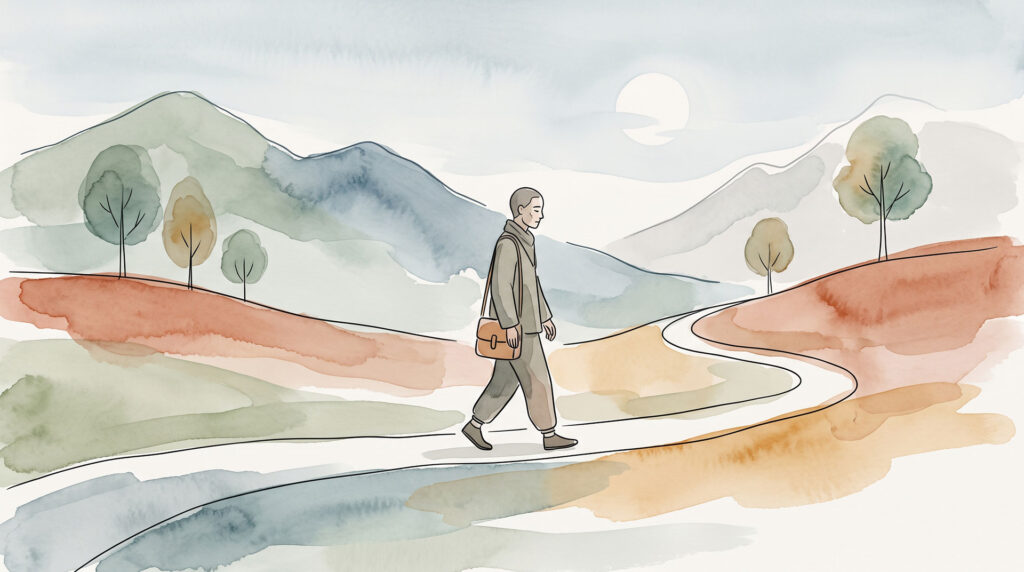
You can cope with job loss by treating it as more than a practical problem to solve. Work can provide routine, social contact, purpose, activity, status and financial security, so it makes sense if losing your job feels personal. Start by naming what has changed, keeping a little structure in your days, staying connected to people and taking the next practical step without turning every task into a judgment about your worth.
You may feel pressure to update your CV, apply for roles and stay positive immediately. Those things may matter, especially when money is tight. But they can sit alongside grief, anger, embarrassment, relief, fear or exhaustion. You do not have to pretend the loss was nothing in order to take practical steps.
People respond to job loss in different ways. Research has identified distinct patterns of grief, anxiety, depression and resilience after people lose work. Those patterns are not labels for you. They are a reminder that there is no single correct reaction and no one route through the change.
Why does losing a job hurt so much?
A job can be much more than income. It may shape when you wake up, who you speak with, how you organise your week and what you say when someone asks what you do. It can offer a familiar rhythm, a team, a sense of contribution and the confidence that comes from knowing your role.
Research on employment and well-being supports this wider picture. Compared with unemployed people, employed people tend to report more access to time structure, social contact, collective purpose, activity, status and financial resources. That does not mean every job gives every person all of these things. It does help explain why an ending can shake more than a bank balance.
You might miss the work itself, a colleague, a commute, a regular lunch break, being the person who knew how to solve a particular problem or the sense that you were useful to others. You might have disliked parts of the role and still grieve what it gave you. Relief and loss can exist together.
Before asking yourself what you should do next, try naming what ended. Finish this sentence without editing it: “What I miss most about my job is…” Your answer might be income, routine, people, confidence, status, purpose or the future you thought the role would make possible. Specific words can make a big loss feel less like a vague failure.
Give yourself a short period to absorb what happened
Job loss and unemployment can come with a rush of practical demands. There may be final pay, paperwork, applications, bills, conversations with family or decisions about what happens next. If you were dismissed or made redundant unexpectedly, there may also be shock, feel overwhelmed, and a need to understand what happened.
You do not need to have a complete plan in the first few days. Make the horizon smaller. Ask:
- What needs attention today?
- What can wait until later this week?
- Who needs to know?
- What information do I need before I make a decision?
- What would help me feel a little steadier this afternoon?
This is not avoidance. It is a way of separating immediate tasks from the enormous question of what the loss means for your whole life. You may need to act, but you do not need to solve your future all at once.
Keep a basic weekday shape
When work ends, time can suddenly feel too empty and too full of worry. One gentle way to help you cope is to create a light structure for your days. Research on unemployment suggests that losing the routine and other less visible benefits of work can be connected to lower well-being. That does not mean there is one perfect schedule that will fix the loss. It means a little shape may be worth experimenting with.
Choose a wake-up time that feels realistic. Get dressed. Eat something. Set a limited period for job searching or administration, then make room for one other part of life. This might be a walk, a school pickup, a phone call, a class, a hobby or a household task.
A simple day could look like this:
- Morning: one practical task, such as reviewing a CV or contacting an agency.
- Midday: food and a change of scenery.
- Afternoon: one task that gives you connection, movement or a sense of completion.
- Evening: stop searching at a planned time and do something that lets your mind rest.
The aim is not to recreate your old workday perfectly. It is to stop the loss from taking up every hour.
Stay connected, even if you feel embarrassed
Job loss can make people withdraw and increase insecurity. You may avoid former colleagues because you do not know what to say. You may worry that friends will ask questions you cannot answer. You may feel ashamed even when the ending was outside your control.
Try to keep one or two connections open. You do not need to ask everyone for a job lead or explain the whole story. A simple message can be enough: “I have been finding the change harder than I expected. Would you be up for a coffee or a call?”
Social contact is one of the things work can provide, and losing it can make a job loss feel lonelier than people expect. The people who knew your work may also remember strengths and contributions that are hard to see when you are feeling rejected.
If you do want practical help, make the request specific. You could ask someone to look at one paragraph of your CV, practise interview questions with you, share a job lead or introduce you to someone in an industry you are exploring. A clear request can make support easier for others to offer.
Separate the job search from your self-worth
Applying for work can stir up rejection, comparison and fear. It is easy for a practical task to become a private verdict: “If nobody replies, I do not matter.” That is an impossible burden to place on every application.
Try naming the task plainly. “For the next 30 minutes, I am updating my work history.” “Today, I am applying for one suitable role.” “This afternoon, I am researching one training option.” The task may still be hard, but it becomes something you can do rather than a referendum on your value.
The loss of a job may touch your sense of role, status and purpose. It does not erase your skills, experience, care or character. A role ended. That is not the same as you ending.
Make room for the feelings without letting them run the whole day
You may be angry about the decision, sad about colleagues, afraid about money or relieved to be away from a difficult workplace. Feelings can change from day to day. A rejection email, a former colleague’s update or a quiet weekday morning can bring the loss back close.
A difficult day does not mean you are back at the beginning. If that pattern feels familiar, it may help to understand why grief comes in waves. Job loss can carry reminders too: your old commute, a uniform, a calendar, a workplace message or a conversation about careers.
Give the feeling a small, contained place. You might write for ten minutes about what you are angry about, take a walk without trying to solve anything, speak to someone who will listen or make a list of what the role gave and took from you. The aim is not to turn grief into a project. It is to avoid having to fight the feeling all day in silence.
Rebuild purpose in small ways
Work often gives people a reason to get up, a sense of contribution and a visible way to use their abilities. When that ends, you may need to find smaller ways to experience purpose while you search for what comes next.
This does not have to be impressive. You might help a friend, take a course, volunteer for something limited, finish a practical task at home, care for someone, make something with your hands or build a habit that reminds you of your strengths. The purpose is not to fill your time until you are productive again. It is to remember that usefulness and meaning are not owned by a job title.
Notice what the role allowed you to practise. Perhaps you value solving problems, organising, making things clearer, helping people, creating, leading, caring or learning. Those values can outlast a particular employer and may offer a clue about what you want to carry forward.
Use structured help if it feels useful
You do not have to manage the job search entirely alone. Research on a group programme for recently unemployed adults found benefits from combining job-search skills, problem solving, preparation for setbacks and positive social reinforcement. That does not mean a workshop or peer programme will suit everyone. It does suggest that practical structure and encouragement can be useful together.
If there is an employment workshop, peer programme, careers service, professional association or course available to you, consider whether it offers something you need right now. You might be looking for practical skills, accountability, information about a new field or simply contact with people who understand the effort involved.
You can also create a smaller version with someone you trust: a weekly check-in, a shared work session or a plan to review one task at a time. The point is not pressure. It is having support around a process that can otherwise feel isolating.
When might extra support help?
There is no fixed timetable for adjusting to job loss. Financial pressure, the way the role ended, your support network and other parts of life can all affect how manageable the change feels.
Consider speaking with a GP, counsellor, employment service or qualified mental-health professional if the loss is persistently making everyday life much harder to manage, if shame or anger is taking over or if you are withdrawing from everyone and cannot find a way back into ordinary routines.
Support is not an admission that you are incapable of rebuilding. It can be a place to speak honestly about the part people often skip over: loss of your job can hurt because it mattered.
FAQ
- Is it normal to grieve after losing a job? Yes. A job can provide income, routine, connection, purpose, activity and status. Losing it can bring a genuine sense of absence, particularly when the ending was sudden, unfair or connected to plans you valued.
- How do I cope with the anxiety of being unemployed? Make the next task smaller. A light daily structure, regular contact with supportive people and clear limits around job-search time can make the day more manageable. If anxiety is persistent or interfering with daily life, speaking with a qualified health professional may help.
- What should I do first after losing a job? Start with the immediate practical needs, such as understanding your final pay, gathering documents and identifying the next required action. Then choose one small step for the day rather than trying to solve your entire career at once.
- Can I miss a job I did not enjoy? Yes. You may miss the routine, colleagues, pay, identity or security even if parts of the work were difficult. Relief about leaving and grief about what ended can both be true.
References
- Caplan, R. D., Vinokur, A. D., Price, R. H., & van Ryn, M. (1989). Job seeking, reemployment, and mental health: A randomized field experiment in coping with job loss. Journal of Applied Psychology, 74(5), 759–769. https://doi.org/10.1037/0021-9010.74.5.759
- McKee-Ryan, F. M., Song, Z., Wanberg, C. R., & Kinicki, A. J. (2005). Psychological and physical well-being during unemployment: A meta-analytic study. Journal of Applied Psychology, 90(1), 53–76. https://doi.org/10.1037/0021-9010.90.1.53
- Paul, K. I., Scholl, H., Moser, K., Zechmann, A., & Batinic, B. (2023). Employment status, psychological needs, and mental health: Meta-analytic findings concerning the latent deprivation model. Frontiers in Psychology, 14, Article 1017358. https://doi.org/10.3389/fpsyg.2023.1017358
- Selenko, E., Batinic, B., & Paul, K. I. (2011). Does latent deprivation lead to psychological distress? Investigating Jahoda’s model in a four-wave study. Journal of Occupational and Organizational Psychology, 84(4), 723–740. https://doi.org/10.1348/096317910X519360
- van Eersel, J. H. W., Taris, T. W., & Boelen, P. A. (2021). Grief reactions, depression, and anxiety following job loss: Patterns and correlates. European Journal of Psychotraumatology, 12(1), Article 1905348. https://doi.org/10.1080/20008198.2021.1905348


Find Your Safe Space Today
If you're carrying your own grief, or want support showing up for someone you love, you don't have to figure it out alone.
Kevin built this practice because he once needed it himself. Whatever you're holding, you're welcome to bring it here.
No commitment. Completely confidential.
- ✉ Send Kevin a message
- 🌏 Online sessions — Australia & Philippines
- 🔒 All communications are confidential