
Can Grief Cause Anxiety and Panic Attacks?
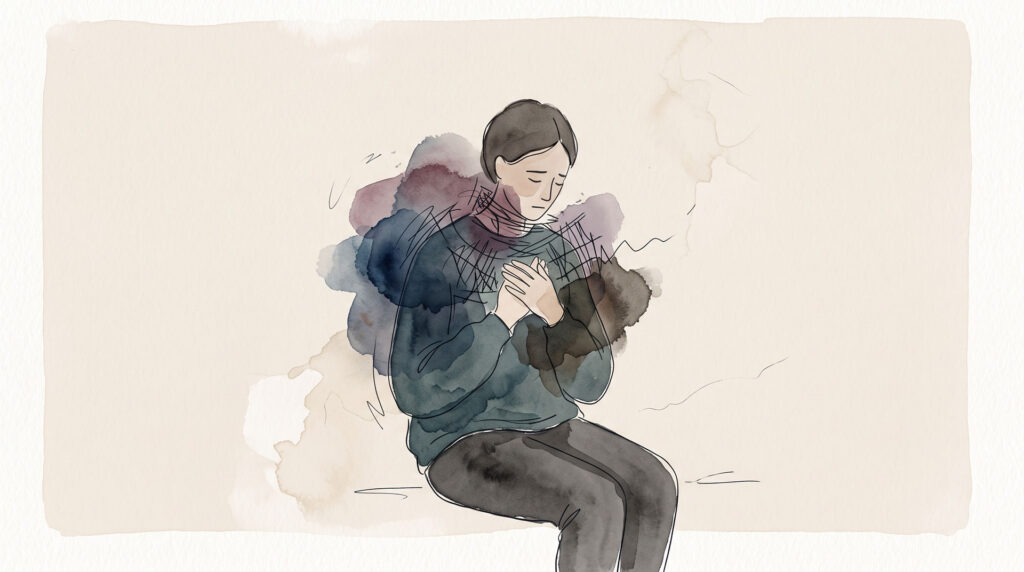
Grief can be accompanied by anxiety and, for some people, panic-like episodes, especially when a reminder of the person who died brings a sudden rush of fear or physical alarm. These experiences can feel frightening, but they do not mean you are grieving wrongly. Because panic-like symptoms can overlap with other health concerns, new, severe or worrying symptoms should be assessed rather than assumed to be grief.
Grief is often described as sadness, but it is rarely only sadness. It can include longing, anger, guilt, numbness, exhaustion, worry and moments when the world feels much less predictable than it once did. After a death, you may find yourself checking on people more often, struggling to settle, replaying conversations or becoming frightened by sensations that seem to arrive without warning.
This article cannot tell you whether you have an anxiety disorder or a panic disorder. It can, however, help you understand why grief and anxiety can overlap, and when it may be useful to seek more support.
Why can grief make you feel anxious?
Losing someone can change far more than one relationship. You may also lose routines, shared plans, practical help, financial certainty, a sense of identity or the person you expected to turn to when life became difficult. The future may suddenly feel much less certain.
Anxiety can grow in that uncertainty. Your mind may keep asking questions it cannot fully answer: Who else could I lose? How will I manage this? What if something happens again? What if I cannot bear this feeling? These questions are not proof that you are weak. They can be part of trying to find solid ground after something important has changed.
Clinical research describes anxiety as a common and sometimes overlooked part of bereavement. At the same time, no two people grieve in the same way. Culture, the relationship, the circumstances of the death, previous experiences and the support around you can all shape how grief feels. One person may feel anxious from the beginning. Another may notice it later. Neither pattern is a test of how much they loved the person who died.
What can grief anxiety feel like day to day?
Grief anxiety can be loud, but it can also be quiet and persistent. You may notice that you are:
- checking messages or loved ones more often than before
- replaying conversations or imagining different outcomes
- avoiding places, dates or tasks connected to the death
- finding ordinary decisions unexpectedly difficult
- feeling restless when you are still
- worrying about the safety of people you love
- feeling on edge during moments that used to feel ordinary
For some people, the worry is mainly outward. A delayed reply or missed call can feel much larger after death has made loss feel possible in a new way. For others, the worry is inward: fear of crying in public, fear of not coping with work, fear that the pain will never change or fear of what a sudden wave of grief means.
The feelings may be difficult, but they are not a verdict on your character. They are information that something in you is asking for care, steadiness or room to speak honestly.
Can grief bring on panic attacks?
It can bring panic-like episodes for some people, particularly around grief reminders. In a study of adults who were seeking treatment for complicated grief, some participants reported episodes of intense fear connected to reminders of the person who died, as well as worry about having another episode.
That finding does not mean that everyone who is grieving will have panic attacks. It also does not prove that grief alone causes panic disorder. The study involved people already seeking help for complicated grief, so it cannot be used as a picture of every bereaved person’s experience.
Still, it gives language to an experience many people find frightening: a reminder can arrive, and suddenly your body may feel alarmed. You may want to escape, feel overwhelmed or fear that you are losing control. The episode may pass, yet the fear of it happening again can make the day feel smaller.
If this sounds familiar, try naming the moment as simply as you can: “A reminder has stirred my grief, and I feel frightened.” Naming it may not stop the feeling immediately. It can create a little space between the sensation and the story your mind starts to tell about it.
What can a panic-like episode feel like?
Panic-like experiences can involve a racing or pounding heart, sweating, dizziness, chest discomfort, clammy skin, shakiness or breathlessness. They can feel intensely physical, which is one reason they are so alarming.
It is important not to assume that a new physical symptom is panic or grief. Grief-related anxiety can resemble symptoms of physical illness, and health concerns can coexist with grief. If symptoms are new, unexplained, severe or worrying, seek medical assessment rather than trying to decide on your own what they mean.
If you have already had a health check and recognise a familiar anxiety response, a few grounding steps may help you meet the moment more gently:
- place both feet on the floor and notice the surface beneath them
- look around and name a few things you can see
- take one slow breath out, without forcing yourself to breathe perfectly
- remind yourself of the date, where you are and what is happening right now
- message or call someone you trust if being alone feels harder
The goal is not to argue yourself out of grief. It is to give yourself something steady while the feeling moves through.
Why might anxiety appear after the first shock has passed?
Early grief can be filled with practical demands. There may be family conversations, arrangements, work messages, travel, paperwork or responsibilities that cannot wait. You may feel numb, focused on the next task or surprised by how much you can get through.
Later, when there is less to organise and fewer people checking in, the reality of the death may feel more present. The absence can show up at a shared meal, before a difficult decision, on a birthday or during a quiet evening. You may wonder why you feel more unsettled now when you appeared to be managing earlier.
You have not failed a grief test. Grief can fluctuate over time, and a more anxious period does not mean you loved the person less at the beginning or that you are going backwards now. It may simply mean another part of the loss has become visible.
Try to avoid comparing your response with someone else’s. One person may be overwhelmed early and later find more steadiness. Another may feel numb first and more emotional later. Both deserve patience.
What helps when grief and anxiety arrive together?
There is no trick that removes grief. The aim can be smaller and kinder: reduce the struggle you are having with the feeling in this next hour.
Make the next hour smaller
When your thoughts are racing far ahead, choose one immediate thing within reach. Drink a glass of water. Step outside for a few minutes. Reply to one message rather than all of them. Put food somewhere visible for later. Anxiety often speaks in enormous questions. A small action brings you back to the part of the day you can actually meet.
Let someone know what is happening
You do not need to explain your whole grief perfectly. A simple message can be enough: “Today is difficult and I feel on edge. Could we talk for a few minutes?” Support might come from a friend, family member, colleague, faith community, grief group or qualified professional. What matters is not finding a perfect person. It is having somewhere the feeling does not have to stay hidden.
Give reminders some structure
Avoiding every reminder can make life smaller, while forcing yourself into the hardest reminder all at once can feel overwhelming. Consider a middle path. You might choose a time to look at photos, visit a meaningful place with someone else, write a few lines about what you miss, or listen to a song and then do something gentle afterwards.
You are allowed to approach grief at a pace that feels possible. You do not have to prove courage by making every hard thing harder.
Notice the extra story anxiety adds
Grief may say, “I miss them.” Anxiety can add, “I will never be able to bear this.” Grief may say, “Today hurts.” Anxiety may add, “Every day will hurt exactly like this.”
When you notice that second sentence, see if you can return to the first. The first is painful, but it is true to the moment. You do not have to solve a lifetime of grief while you are having one difficult day.
Protect a few ordinary rhythms
Loss can disrupt sleep, meals, movement and concentration. You do not need a perfect routine. A few repeatable anchors can be enough: opening the curtains in the morning, eating something at regular times, taking a short walk or setting aside a quiet period before bed. These actions do not erase the loss. They can give a day some structure while so much feels changed.
When might grief anxiety need more support?
There is no universal deadline for grief, and needing support is not a sign that you have grieved badly. A clinical assessment can be useful when anxiety or panic-like episodes keep returning, begin to shape most of your choices or interfere with work, relationships, sleep or everyday responsibilities.
You might also seek support if you are avoiding everything connected to the death, if you feel increasingly isolated or if you want help making sense of symptoms that have become hard to carry alone. A GP, bereavement service or qualified mental-health professional can consider the whole picture, including whether physical symptoms need medical attention.
For many people, the first helpful step is one honest conversation. You can tell someone that grief has begun to feel anxious, not only sad. You can say that you are tired of pretending you are fine. Putting words to the experience may not change the loss, but it can make the weight less private.
Can anxiety ease without forgetting the person you lost?
Yes. Feeling less anxious does not mean that your relationship with the person has become less important. It does not mean you have betrayed them, moved on too quickly or decided that the loss no longer matters.
It may mean that your life is beginning to make room for both love and the reality of their absence. Significant dates, places and memories may still bring tenderness. Over time, some moments may hold sadness, love, memory and even gratitude alongside one another, without being dominated by alarm.
You do not need to force that change. Your task can be much simpler: meet the anxiety that is here today with as much gentleness as you can manage.
FAQ
- Can grief cause an anxiety disorder? Grief can be accompanied by anxiety, and clinical literature notes that bereavement can trigger the onset of an anxiety disorder for some people. However, an article cannot determine what is happening for you personally. If anxiety is persistent or affecting daily life, a qualified health professional can help assess it.
- Are panic attacks normal in grief? Some people experience panic-like episodes connected to grief reminders. Research has documented this in treatment-seeking adults with complicated grief, but that does not mean panic attacks are expected for everyone who is bereaved. New, severe or worrying physical symptoms should be assessed rather than assumed to be panic.
- Why am I anxious about losing other people after a death? After a death, it can be harder to feel that the people and routines you rely on are secure. Worry about other losses can be one way anxiety shows up alongside grief. You do not need to handle that fear in silence.
- How long does grief anxiety last? There is no fixed timeline. Grief reactions vary and can fluctuate. Instead of judging yourself against a deadline, notice whether anxiety is making life increasingly narrow or difficult to manage, and seek additional support if it is.
References
- Bui, E., Horenstein, A., Shah, R., Skritskaya, N. A., Mauro, C., Wang, Y., Duan, N., Reynolds, C. F., III, Zisook, S., Shear, M. K., & Simon, N. M. (2015). Grief-related panic symptoms in complicated grief. Journal of Affective Disorders, 170, 213–216. https://doi.org/10.1016/j.jad.2014.08.028
- Bui, E., LeBlanc, N. J., Morris, L. K., Marques, L., Shear, M. K., & Simon, N. M. (2013). Panic-agoraphobic spectrum symptoms in complicated grief. Psychiatry Research, 209(1), 118–120. https://doi.org/10.1016/j.psychres.2013.03.033
- Komischke-Konnerup, K. B., Zachariae, R., Johannsen, M., Nielsen, L. D., & O’Connor, M. (2021). Co-occurrence of prolonged grief symptoms and symptoms of depression, anxiety, and posttraumatic stress in bereaved adults: A systematic review and meta-analysis. Journal of Affective Disorders Reports, 4, Article 100140. https://doi.org/10.1016/j.jadr.2021.100140
- Shear, M. K., Muldberg, S., & Periyakoil, V. S. (2017). Supporting patients who are bereaved. BMJ, 358, j2854. https://doi.org/10.1136/bmj.j2854
- Shear, M. K., & Skritskaya, N. A. (2012). Bereavement and anxiety. Current Psychiatry Reports, 14(3), 169–175. https://doi.org/10.1007/s11920-012-0270-2


Find Your Safe Space Today
If you're carrying your own grief, or want support showing up for someone you love, you don't have to figure it out alone.
Kevin built this practice because he once needed it himself. Whatever you're holding, you're welcome to bring it here.
No commitment. Completely confidential.
- ✉ Send Kevin a message
- 🌏 Online sessions — Australia & Philippines
- 🔒 All communications are confidential